Control of image formation.
Light microscope source of radiation.
Lens is made of glass.
The radiation source source of illumination is light wavelength 400 700 nm.
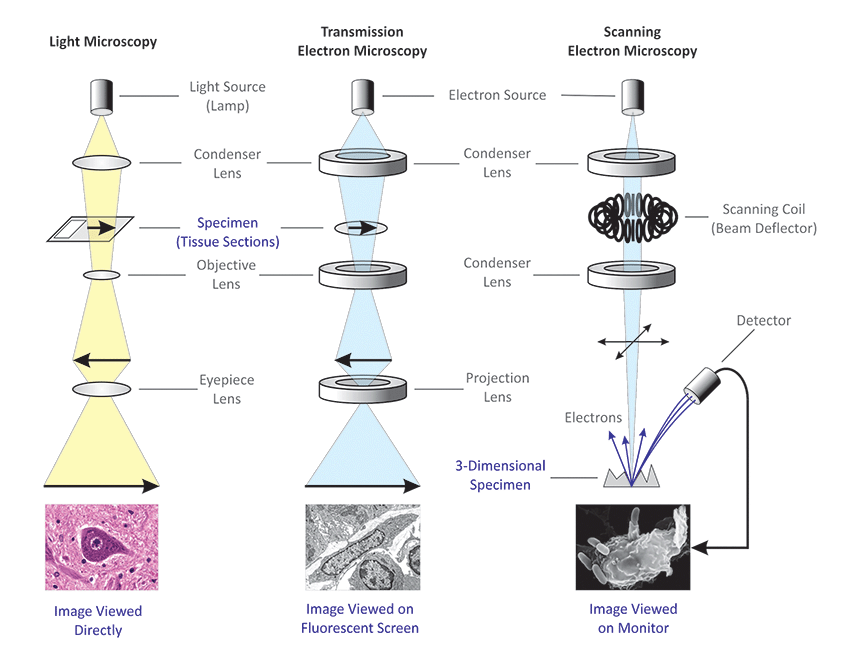
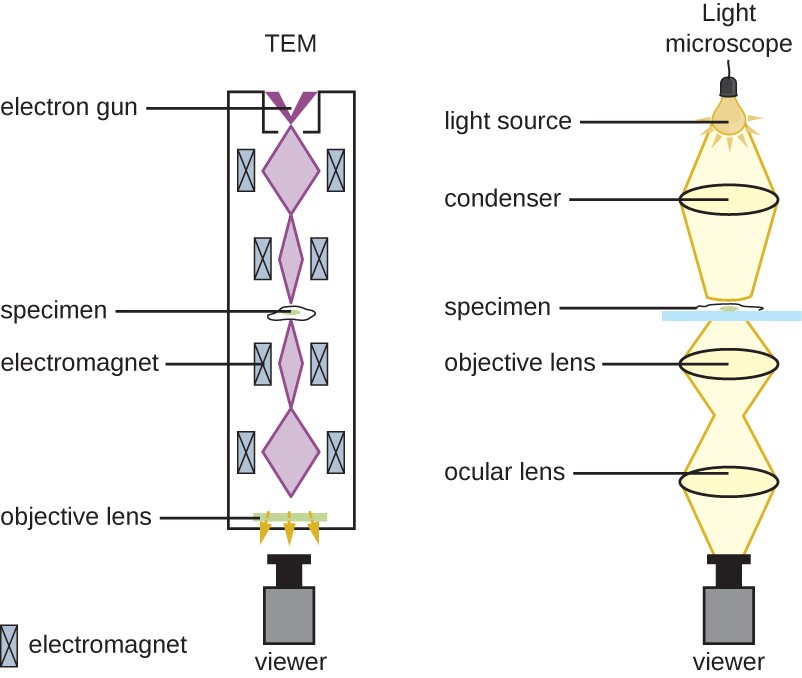
The electron beam follows a vertical path through the microscope which is held within a vacuum.
Both light microscopes and electron microscopes use radiation to form detailed images of objects that a human eye cannot produce unaided.
Specimen preparation takes usually few minutes to hours.
A beam of electrons is produced at the top of the microscope by an electron gun.
1 nanometer 1 x 10 9 m.
Source of radiation from an electron microscope.
Light microscopes both simple and compound use visible light as their radiation.
Since the light is in the visible range we can see images formed by a light microscope with naked eyes.
Illuminating source is the beam of electrons.
The sem is an instrument that produces a largely magnified image by using electrons instead of light to form an image.
Light microscopes use light approx wavelength 400 700 nm electron microscopes use beams of electrons approx equivalent wavelength 1 nm.
My inquiries revealed that plan apochromats have the highest levels of uv light transmission including to the eyes of the user.
X rays are produced in the electron microscope whenever the primary electron beam or back scattered electrons strike metal parts with sufficient energy to excite continuous and or characteristic x radiation.
Each of these microscopes possesses distinct features and is appropriate for different purposes.
Live or dead specimen may be seen.
Light is focused with the help of glass lenses.
Not affected by magnetic field.
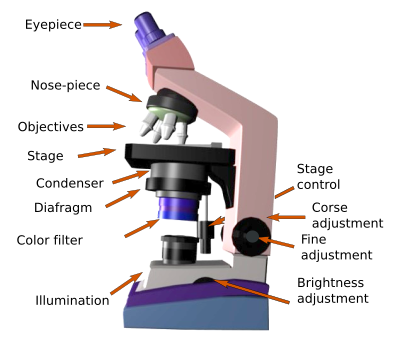
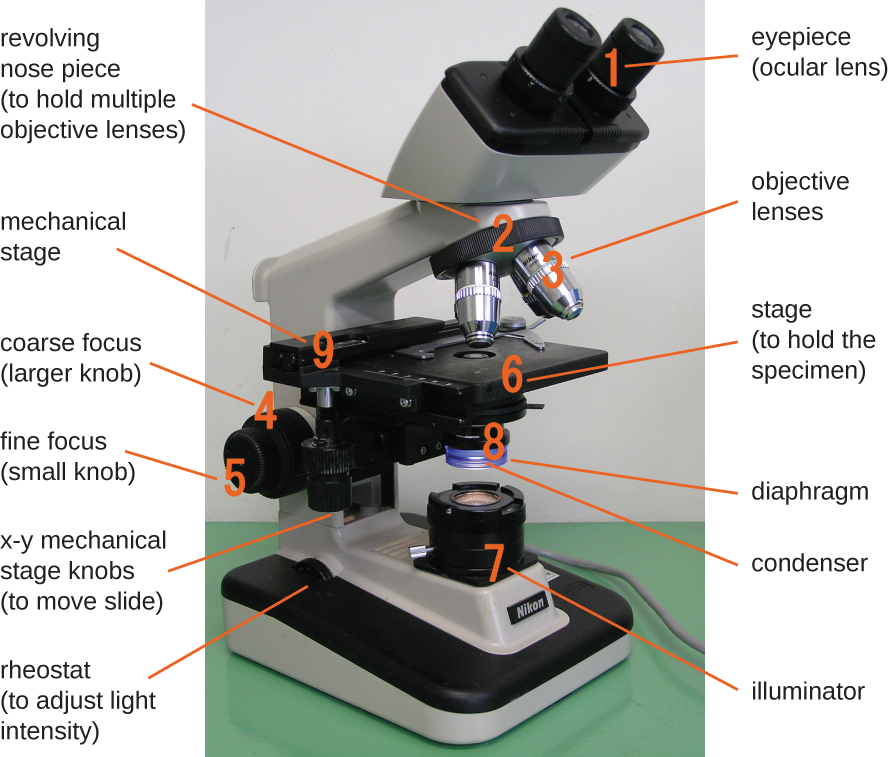
On more advanced microscopes the diaphragm will be between the optic and the.
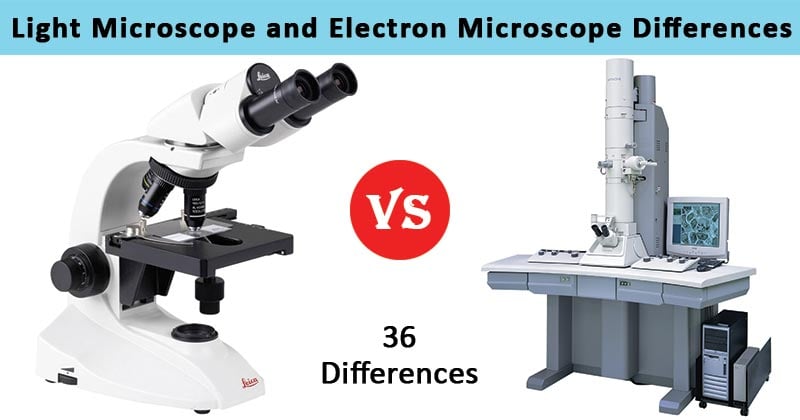
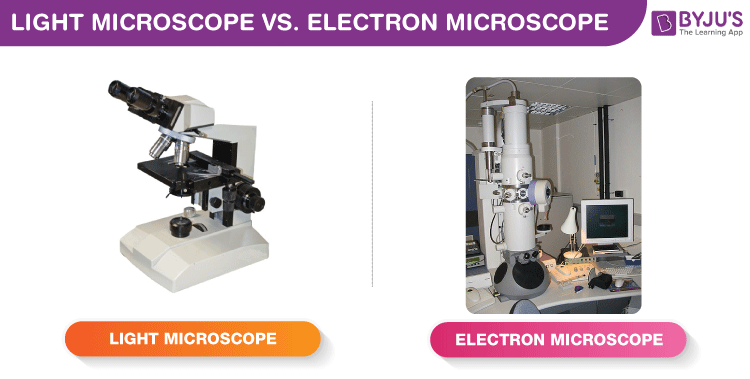
The most common types of microscopes are the light microscope and electron microscope.
Light via glass lenses beams of electrons can be focused using electromagnets due to negative charge on electrons.
This has a wavelength of about 400 700 nm nanometer.
This is confounded by the fact that most leds used in modern microscopes emit some uv light.
The advanced light source als in berkeley california is home to xm 1 a full field soft x ray microscope operated by the center for x ray optics and dedicated to various applications in modern nanoscience such as nanomagnetic materials environmental and materials sciences and biology.
There is risk of radiation leakage.
On most basic microscopes the diaphragm is located on top of the light source between the light bulb and the stage.