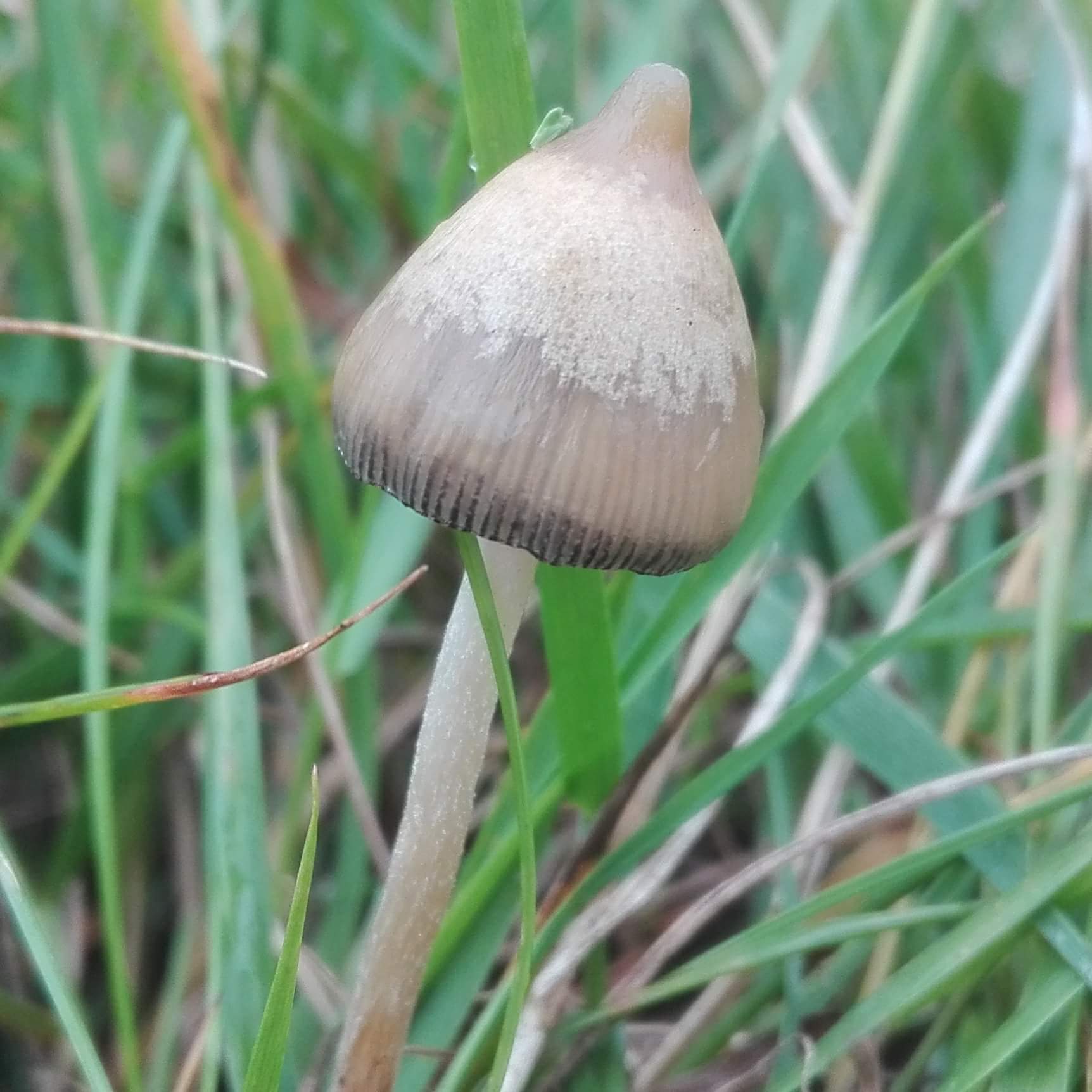
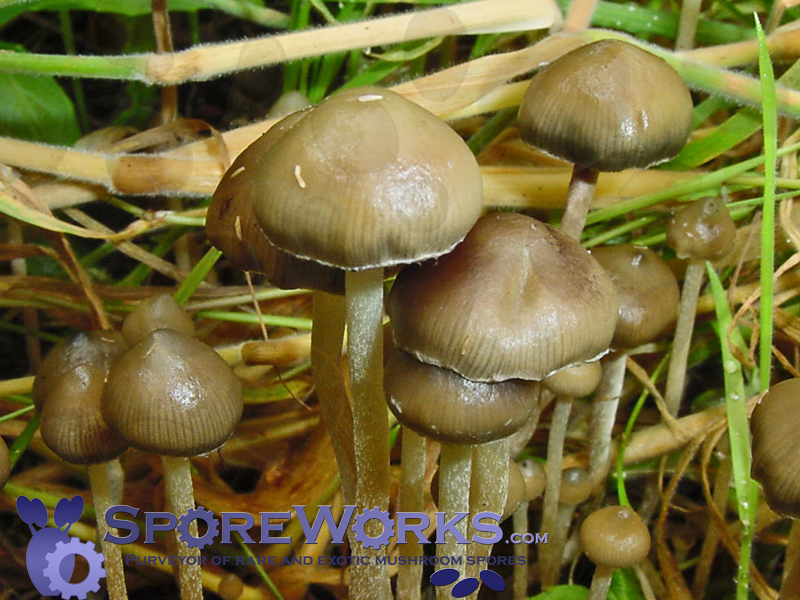
Psilocybe semilanceata commonly known as the liberty cap is a species of fungus which produces the psychoactive compounds psilocybin and baeocystin it is both one of the most widely distributed psilocybin mushrooms in nature and one of the most potent the mushrooms have a distinctive conical to bell shaped cap up to 2 5 cm 1 0 in in diameter with a small nipple like protrusion on the top.
Liberty cap spore print color.
Manure enriched grasslands.
My attempt at a spore print was a bust.
In a few hours spores will collect on the paper according to the radiating symmetry of the gills.
The gills will be somewhat crowded and turn from pale to purple brown in old age.
If the cap leaves behind dark purplish brown spores when placed on a piece of paper while drying out it is more than likely a liberty cap mushroom.
Liberty caps are common on the west coast of the united states particularly in the northwestern states of washington and oregon.
The spore print is a pale orange brown color.
It s extremely rare we get a complaint on one of our spore prints as we strive for high quality.
The gill attachment to the stem can be called adnexed or rather a very light attachemnt.
This is simultaneously confirming the correct spore color for the liberty cap as well as displaying common feature of this mushroom.
Pacific blue liberty cap spore print microscopy kit.
They will very in size and it really depends on the size of the mushroom cap that drops the spores as to how big each print will be.
It can be easy to get excited at the caramel cap color when you notice it in the field but you should know by now that that doesn t necessarily mean you ve found psilocybe.
15 feet from garage on a very wooded lot 20 minutes from the coast.
Pacific blue liberty cap spore print microscopy kit.
These look like panaeolus foenesecii.
This poisonous saprobic grassland mushroom is most often found on upland pastures notably on hill slopes.
Do not taste psilocybe semilanceata because it is hallucinogenic and some people have required hospital treatment after eating this species.
If the mushrooms have partially dried or have been refrigerated for an extended period of time you probably won t get much of a spore print.
Take the print on a non porous pure black surface.
Habitat ecological role.
Keep in mind however that the longer the cap is left.
The pacific blue strain is an uncommon but not necessarily rare color variant with unusual bluish tones and a more hemispheric cap shape.
You will see the print more easily on white but any difference from black is best assessed on a black surface not sure about the global distribution of p.